The Power of Asynchronous JavaScript: Improving Web Performance
Asynchronous programming has become increasingly important in web development, as it allows for non-blocking operations that can greatly improve web performance.

Thumbnail source: here
Asynchronous programming has become increasingly important in web development, as it allows for non-blocking operations that can greatly improve web performance. In this blog post, we'll explore what asynchronous JavaScript is, how it works, and why it's become a popular choice for frontend developers looking to create fast and responsive web applications.
What is Asynchronous JavaScript?
Asynchronous JavaScript refers to the way that JavaScript code is executed, where multiple tasks can be executed simultaneously without waiting for each other to complete. This is achieved through the use of callbacks, promises, and async/await functions.
Callbacks: A callback is a function that is passed as an argument to another function and is executed when the task is completed. Callbacks are used to handle events, and are commonly used in event-driven programming.
Promises: A promise is an object that represents the eventual completion or failure of an asynchronous operation. Promises allow developers to write code that waits for a task to complete before executing the next piece of code.
Async/Await: Async/await is a syntactic sugar for working with promises. Async functions return a promise, and await is used to wait for the promise to resolve.
How Does Asynchronous JavaScript Improve Performance?
-
Asynchronous JavaScript improves performance by allowing web applications to perform tasks in the background, without blocking the main thread. This means that the user interface can remain responsive, even if the application is performing complex operations.
-
For example, when making an AJAX request to a server, the request can be made asynchronously, allowing the user to continue interacting with the web page while the request is being processed in the background. Once the request is complete, the result can be displayed on the page without disrupting the user experience.
console.log("start");

setTimeout(function () {
  console.log("first");
}, 1000);

console.log("second");
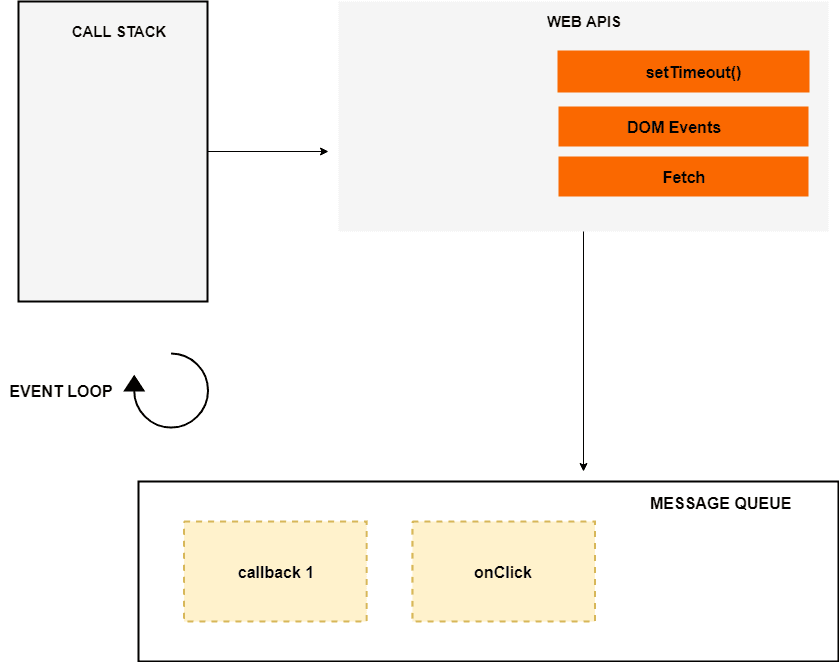
This code will log "start" and "second" to the console immediately, but it will wait 1000 milliseconds (1 second) before logging "first" to the console. This is because the setTimeout function is asynchronous and runs in the background while the rest of the code continues to execute.
Why is Asynchronous JavaScript Important?
Asynchronous JavaScript is important for creating fast and responsive web applications. Without asynchronous programming, web applications would need to block the main thread while waiting for tasks to complete, which would result in slow and unresponsive applications.
Asynchronous JavaScript also allows developers to write code that is more readable and maintainable. By breaking up complex tasks into smaller, asynchronous functions, developers can create code that is easier to debug and modify.
Conclusion
Asynchronous JavaScript is a powerful tool for improving web performance and creating fast and responsive web applications. By leveraging callbacks, promises, and async/await functions, developers can write code that executes tasks in the background, without blocking the main thread. As more and more web applications require real-time interactions and complex operations, the importance of asynchronous JavaScript will only continue to grow.


